
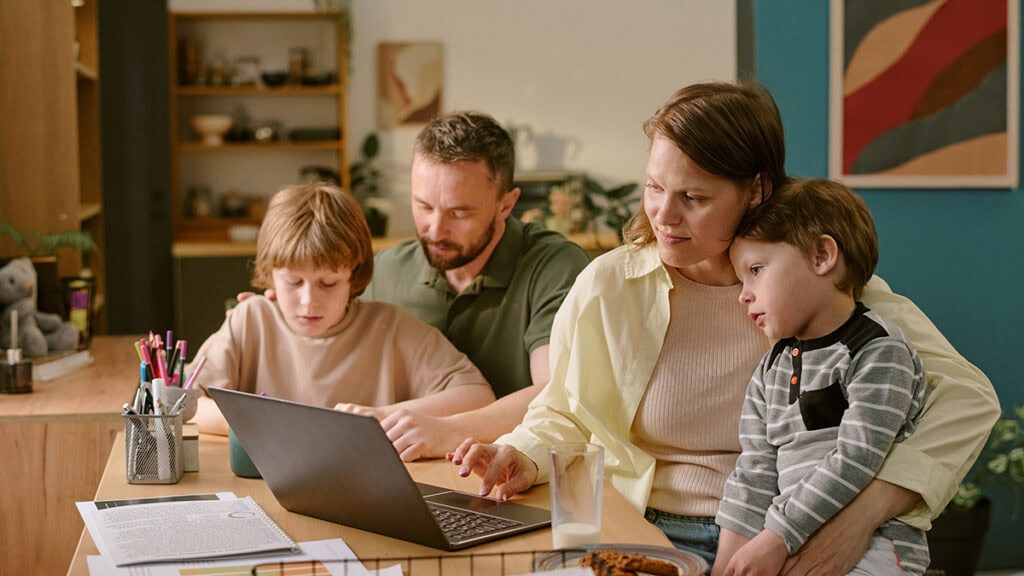
Telehealth positive behaviour support delivers the same NDIS-funded PBS sessions you would get in person, just through a video call, phone, or messaging platform instead. Sessions can run over Zoom, by phone, or through a mix of methods depending on what suits your family. It works well when travel, distance, health, or scheduling make face-to-face appointments hard, and it still means your practitioner, your plan, and your goals stay the same.
Many families weigh up telehealth against an in-person visit and wonder whether something gets lost along the way. It does not have to. Here is what telehealth Positive Behaviour Support actually looks like, what you will need, how sessions are funded, and how to decide if it is the right fit for you.
What is Telehealth Positive Behaviour Support?
Telehealth is simply Positive Behaviour Support delivered remotely rather than face-to-face. Your practitioner still works with you on the same goals, using the same person-centred approach, just connecting through technology instead of sitting in the same room. At Behaviour Collaborations, telehealth positive behaviour support, sometimes referred to as TelePBS, is used to support access, continuity, and consistent implementation, particularly when travel, distance, or other everyday barriers make in-person sessions difficult. It is one of the ways we keep support going for families across South East Queensland and regional areas where a weekly in-person visit is not always realistic.
The clinical process itself does not change. Your practitioner still gathers information, still works with you to build or update your behaviour support plan, and still checks in on how strategies are landing day to day. What changes is the setting, not the standard of support. For some families, telehealth ends up being the only practical way to access consistent positive behaviour support telehealth sessions at all, particularly in parts of regional Queensland where a local practitioner visiting in person every fortnight simply is not available.
The different ways a telehealth session can happen
Telehealth does not just mean a video call. Depending on what works for you and your practitioner, a session can happen over:
- Video, most commonly through Zoom
- Audio only, when video is not practical, or bandwidth is limited
- Text-based chat, for real-time written communication
- Phone, for a straightforward voice call with no internet needed
- Email, for follow-up, documentation, or detailed information between sessions
- A hybrid of any of these, based on whatever combination suits you
This flexibility is often what makes telehealth practical for families who find video calls tiring, or who have limited access to reliable internet at certain times of day. There is no single format that suits everyone, so it is worth telling your practitioner what tends to work best for your household.
Some families settle on one format and stick with it for the life of the plan. Others change format from session to session, using video for a check-in that involves observing a child’s behaviour directly, then switching to a phone call the following week for a quieter conversation about how strategies are going at home. Your practitioner will usually ask what has worked well for you in the past, particularly if you have used telehealth with another provider before, and build your sessions around that rather than defaulting to one format for everyone.

What you need for a telehealth session
Getting set up for a telehealth positive behaviour support session is simpler than most families expect. You will need a device with a camera and microphone, a stable internet connection, and a private space where you feel comfortable talking. There is no specialist equipment or technical setup required. Sessions typically run through Zoom, and if that is new to you, your practitioner can talk you through joining before your first appointment.
A private space matters more than the technology. Positive behaviour support sessions often cover sensitive information, so a room where you will not be interrupted, and where a child or participant does not feel like they are being overheard by siblings or housemates, makes a real difference to how open and useful the conversation can be. If a fully private space is not available in your home, some families choose to join from a parked car, a quiet corner of a library, or another space that offers privacy without needing a dedicated room.
Deciding who should be in the room
One of the first things worth thinking through before a telehealth session is who else needs to be there. For participants under 18, a parent or guardian is present for the session. For adults, that decision sits with you. Some people prefer to have a support worker, carer, or family member join, particularly when a session is about coordinating strategies across school, home, or a wider support team. Others prefer to keep sessions one to one. Either way, it is worth deciding beforehand and letting your practitioner know, so everyone is clear on what to expect and the space stays comfortable and private.
There is no wrong answer here, and the choice can change from session to session. A family might choose to have a support worker present for a planning session focused on coordinating a behaviour support plan across multiple settings, then keep the next session private and one-to-one when the conversation is more personal. Letting your practitioner know ahead of time who will be joining, and why, helps them plan the session appropriately rather than being caught off guard partway through.

Telehealth, in-person, or a blend?
Telehealth is not an all or nothing decision. Behaviour Collaborations may recommend telehealth, in-person support, or a mix of both, depending on your goals, your location, and what your support environment looks like day to day. Some families use telehealth for regular check ins and save in-person visits for assessments or more hands-on sessions. There is no single right way to approach positive behaviour support delivery, only what works for your circumstances and your family.
As a general pattern, sessions that involve directly observing behaviour in a specific environment, such as a Functional Behaviour Assessment in a school or home setting, tend to work best in person. Sessions focused on reviewing progress, adjusting strategies, or talking through how the week has gone are often just as effective by video or phone. Your practitioner will usually suggest a starting mix based on your goals and location, then adjust it as your plan progresses and your circumstances change.
How telehealth Behaviour Support is funded under the NDIS
Positive Behaviour Support, including sessions delivered by telehealth, is funded under the NDIS Behaviour Support line item within the Capacity Building support budget, previously known as Improved Relationships. If you are not sure whether your plan includes this funding, your support coordinator or plan manager can confirm it for you. You can also read more about how the NDIS approaches remote behaviour support delivery on the NDIS Quality and Safeguards Commission website. Because telehealth does not involve travel time or cost, more of that funding tends to go directly toward your sessions rather than getting eaten up by travel.
This matters in practice for families managing a limited Capacity Building budget across the year. A practitioner who would otherwise spend an hour driving to and from an appointment can spend that same hour delivering support instead, which often means your funding stretches further across the life of your plan. If travel has been limiting how often you can see your practitioner, telehealth is worth raising directly, since it may allow more frequent contact within the same budget.
Is Telehealth Positive Behaviour Support right for you?
There is no one answer here. Telehealth positive behaviour support tends to work best when families and support workers stay involved between sessions and can put strategies into practice day to day. If that sounds like your household, or if travel and distance have been making consistent support difficult, it is worth a conversation.
If you are weighing up whether telehealth positive behaviour support is the right fit for your family, we are happy to talk it through with you. Make an enquiry and we will help you work out what combination of telehealth and in-person support suits your goals.
FAQs: Telehealth Positive Behaviour Support
Is telehealth positive behaviour support as effective as in-person support?
For many participants, families and support teams, yes. Telehealth positive behaviour support works particularly well where travel, distance, ill health or scheduling make face-to-face appointments difficult, and it removes the barrier of getting everyone in one room at the same time. What actually determines effectiveness isn’t the format, it’s consistency: families and support workers who stay actively involved and apply strategies between sessions see the same quality of outcome whether the session happened on the couch or over video. Behaviour Collaborations treats telehealth as a genuine service option, not a lesser substitute for face-to-face support.
Can a support worker or teacher join a telehealth positive behaviour support session?
Yes, and it’s often worth arranging. Telehealth sessions can include support workers, teachers or other members of your support team, which matters when strategies need to be consistent across different environments like home and school. Coordinating this way through a telehealth behaviour support plan means everyone hears the same guidance at the same time, rather than information being relayed second-hand. It’s worth flagging who you’d like present to your practitioner ahead of the session so they can structure the time accordingly.
Can I join a telehealth session on a tablet or phone instead of a computer?
Yes. Online behaviour support services through Behaviour Collaborations are built to work on whatever device you already have, whether that’s a laptop, tablet or smartphone. There’s no special hardware or app to buy. If you’re joining from a phone, it’s worth propping it somewhere stable rather than holding it, since a steady picture makes it easier for your practitioner to observe and support the session properly, particularly if a child is moving around during the appointment.
What happens if my internet connection isn’t reliable?
Telehealth doesn’t have to mean video. If your connection is patchy or you’d simply prefer it, sessions can run by phone or audio only instead, so an unreliable connection doesn’t rule out telehealth positive behaviour support altogether. Your practitioner can also suggest quieter times of day for a stronger connection, or agree on a backup plan, such as switching to phone partway through, if the video drops out mid-session.
Is telehealth positive behaviour support available if I live outside South East Queensland?
Yes. TelePBS is one of the main ways Behaviour Collaborations supports participants and families across regional Queensland, where in-person appointments aren’t always practical or available locally. It means access to the same positive behaviour support telehealth model, the same practitioners and the same NDIS-aligned reporting, regardless of postcode.
If I start with telehealth, can I switch to in-person sessions later if my circumstances change?
Yes. Your support plan isn’t locked into one format. If your situation changes, for example you move closer to one of our service areas, your access to transport improves, or you simply feel a session would work better in person, you can talk to your practitioner about switching. The same applies in reverse: if travel or scheduling becomes harder, moving some or all sessions to telehealth is a straightforward conversation, not a formal process.
Does adding telehealth sessions require a new referral or a change to my existing NDIS plan?
No, in most cases. If you already have Capacity Building funding for behaviour support, telehealth and in-person sessions draw from the same budget, so switching between formats or adding telehealth as an option doesn’t need a new referral or plan review. It’s worth mentioning to your practitioner if you’d like to start incorporating telehealth sessions, so they can factor it into your existing support plan, and let your support coordinator know if that helps keep everyone aligned.

NDIS Social and Community Participation: Why consistent support worker records matter
Position Vacant: Behaviour Support Practitioner
NDIS Plan Reassessment: Is Your Evidence Ready?
Join Our Blog
Subscribe for insights and updates
Check back regularly for new posts covering Positive Behaviour Support plans, communication strategies, emotional regulation, family engagement, and everyday approaches that can support wellbeing at home, school, work, and in the community. We also share guidance on navigating support systems and getting the most from services, with content relevant to Brisbane and families across Queensland.
"*" indicates required fields
Need support creating or implementing a Positive Behaviour Support Plan? If you are looking for guidance with Positive Behaviour Support, counselling and mental health support, or reports and documentation, our team can help you understand the next best step. Contact our Brisbane behaviour support team for guidance tailored to your situation.